CYC Photon Gen2
 CYC X1 Pro Gen4
 CYC X1 Stealth Gen3
 Bafang BBSHD
 E-Bike motors BESTSELLER


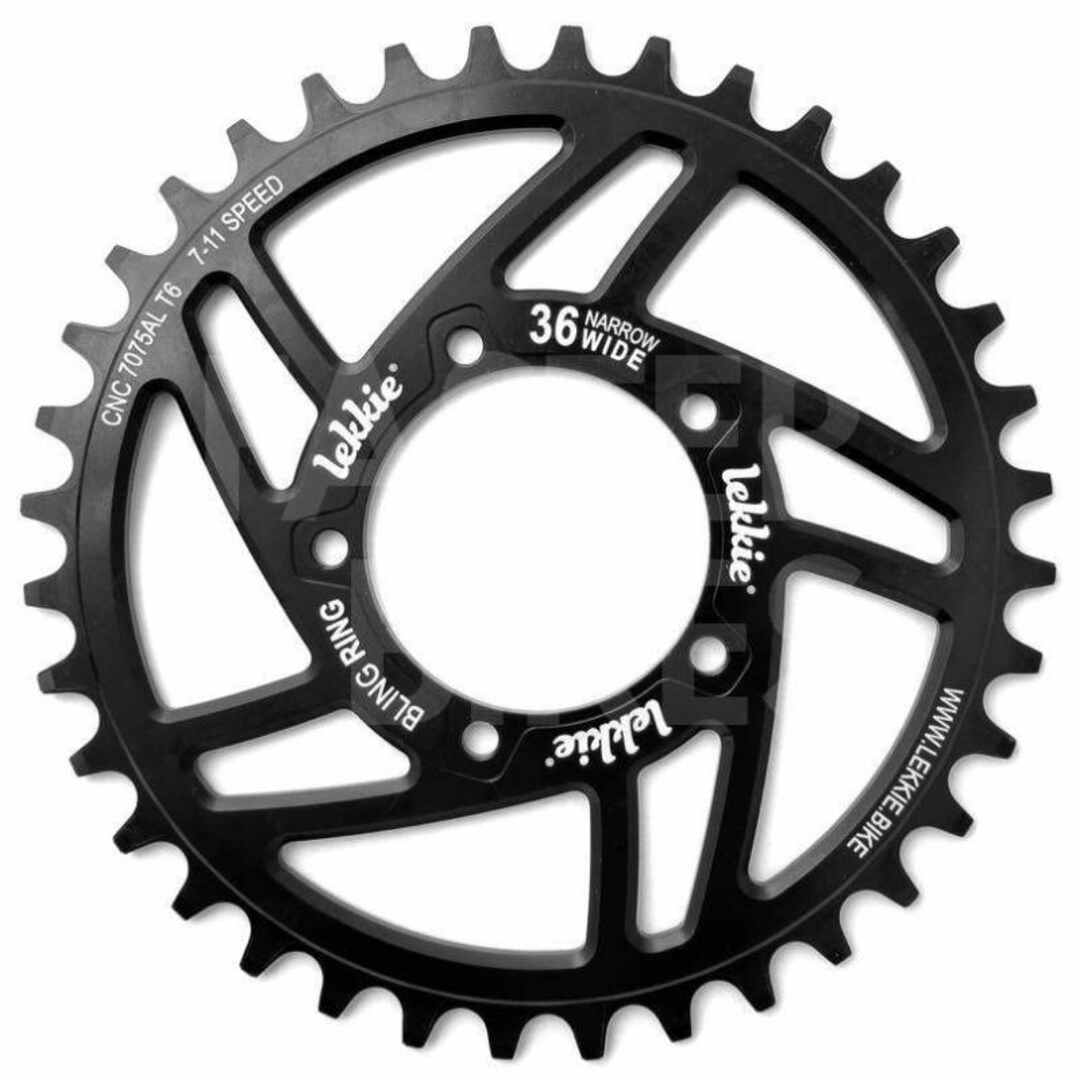
Several factors are decisive here: front chainring size, rear sprocket set, wheel size and cadence. Of course, the amount of effort required also plays a role.
In order to better illustrate this using an example, we make the following assumptions:
- Front chainring: 40 teeth
- Rear sprocket: 10 teeth
- Tire size: 29 inch, wheel circumference 2.31 m
- Cadence: 60 rpm
Translation:
The gear ratio is the ratio of the number of teeth between the chainring (front) and sprocket (rear). In our example, we have a gear ratio of 4 (40/10 = 4.). This means that the sprocket rotates 4 times, while the chainring only rotates once during this time. This would be the case, for example, if we used a chainring with 40 teeth at the front and a sprocket with 10 teeth at the rear -> 40/10 = 4.
Unfolding:
One revolution of the chainring corresponds to one revolution of the crank – the distance covered is referred to as unfolding (m). In other words, how many meters are covered in one crank revolution.

One rotation of the sprocket corresponds to one rotation of the tire. In our example, the sprocket (and therefore the tire) is rotated 4 times with one revolution of the crank, resulting in: 4 x 2.31 m = 9.24 m. With our gear ratio and our 29-inch rear wheel, the tire travel is therefore 9.24 m.
Cadence:
The cadence provides information about the speed of the cranks. This is usually given in revolutions per minute (rpm). A comfortable cadence is around 60 rpm – this corresponds to one complete pedal revolution per second. Most cyclists find this comfortable. According to various studies, the optimum cadence is around 100 rpm. Ideally, the bicycle gear should always be selected so that the cadence remains constant in the desired range (comfortable or optimal) – regardless of whether you are riding uphill or on a flat stretch.
Calculate speed:
These values can now be used to calculate the possible speed. In our example, we now know how many meters we cover per crank revolution (= unfolding) – namely 9.24 meters. At a comfortable cadence of 60 revolutions per minute, this results in: 9.24 x 60 = 554.4 meters. 554.4 m/min x 0.06 = 33.26 km/h. At this cadence we can therefore achieve a speed of approx. 33 km/h, at an optimum cadence of 100 it would be 55.4 km/h.
However, this figure is only theoretically available as long as the necessary power cannot be provided. In practice, there is also the parameter of “power”. Rough guide value: Hobby cyclists usually manage approx. 2.5 – 3.5 watts/kg (professional athletes are at approx. 6-7 watts/kg), which means that the power output is approx. 200-300 watts (again depending on duration etc.). However, the overall performance can be significantly increased with electrical support …
There are some useful calculators on the Internet:
With a multi-gear system, the different sprockets can be used to achieve different ratios and therefore different gear ratios, so that the pedal cadence and / or the effort required remain as constant as possible regardless of the terrain.
We hope that this article has provided you with a little more clarity on this topic and hope you enjoy developing your strength.