
 CYC Photon Gen2
 CYC X1 Pro Gen4
 CYC X1 Stealth Gen3
 Bafang BBSHD
 E-Bike motors BESTSELLER


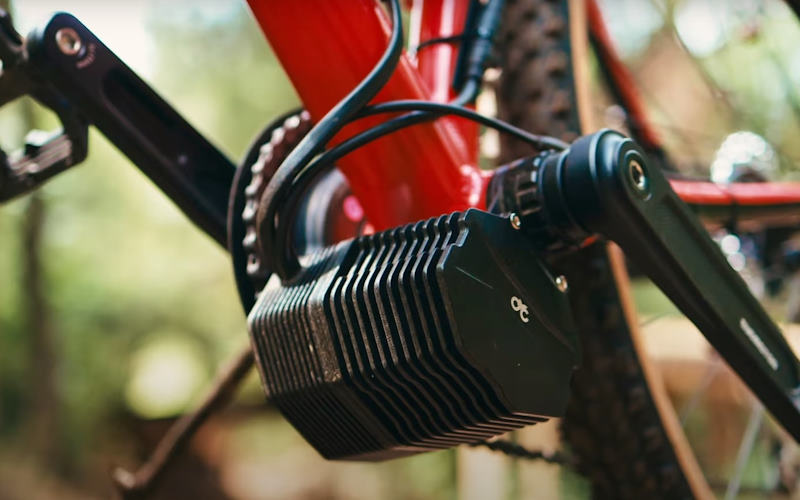
When it comes to choosing an e-bike motor, there are many factors to consider. A not insignificant one is the type of motor control. E-bike motors can be operated either via cadence or torque control, and both have their advantages and disadvantages…
Cadence control:
The cadence control, also known as speed control, is the control available on Bafang BBS01/02/HD motors. The motor provides assistance based on the cadence, i.e. the crank revolutions. As soon as the crank arms are moved, the motor provides assistance up to the power or speed limit (depending on which value is reached first) of the set assistance level. The crank arms can also be moved without exerting any force – only the pedal movement counts for the motor.
Advantages:
- Easy to use: The cadence control is easy to understand and use, which makes it particularly attractive for beginners.
- Max. Support even without effort Since the power of the motor reacts to the crank movement, it is irrelevant whether the rider pedals hard or lightly.
- Longer battery life: The constant power setting can help to extend the battery life as the motor is not used as much.
Disadvantages:
- Less dynamic: The cadence control may not react as well to changes in driving style, e.g. off-road.
- Can be less intuitive: Motor support is always the same, regardless of whether you have a lot or little power.
Torque control:
In contrast, torque control is based on the force you exert on the pedals. The harder you pedal, the more power is generated by the motor. This makes it much easier to control the motor power: Even in the highest support level (max. power and speed), the e-bike can be ridden slowly by applying little pedal force – this is not possible with cadence control, for example, as the motor wants to meet the power and speed specifications of the highest support levels when the crank is moved. The CYC motors have torque control.
Advantages:
- Intuitive control: The torque control allows you to intuitively control the power of the motor with your pedal pressure. The harder you pedal, the more power you get.
- Excellent for hilly terrain: This control method is particularly suitable for riding in hilly terrain, as the motor reacts dynamically to inclines.
- More driving pleasure: Many drivers appreciate the sportier and more dynamic nature of torque control.
Disadvantages:
- A little more complex: the torque control may require a little more practice and fine-tuning to find the optimum driving style.
- May shorten battery life: As the motor is under greater strain, the battery life may be slightly shorter when using torque control (motor power varies).
Conventional e-bikes have torque control. This type of control is seen as more modern and natural. Cadence control was particularly popular in the early years and is increasingly being replaced by torque control.